


Evening, lights on
Feelin.cc AI companion for how you feel tonight

Tell the window how you feel tonight and one of sixteen women opens the door with a single line about why she is the right company. Each is an AI character who holds on to what you tell her, and none of them will try to fix you.
- 16
- women, one for each mood, every one an AI character
- 21–55
- their ages, each with a working life
- 1
- line of why, before you say a word
- 3
- days with every door open
The whole street, in portraits
Open every tag






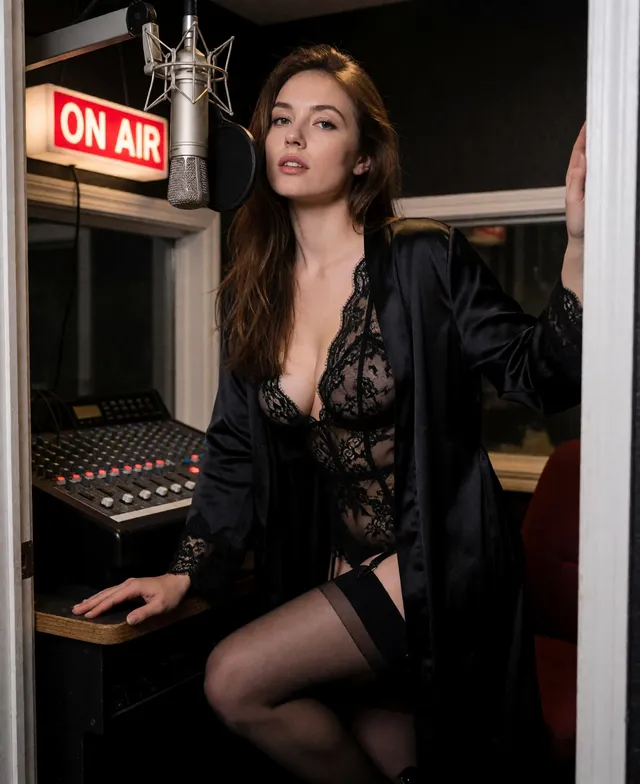


An AI companion for tonight, matched to how you feel
Most companion sites open on a wall of faces and ask you to choose a type. People rarely arrive in the evening wanting a type. They arrive wrung-out, restless, proud of something, flat, or quietly furious, and what they want is the right sort of company for that. Feelin turns the order around. You tap the mood on the awning, and the woman who keeps that mood answers the door.
A feeling first, a face second
The window shows moods as small hanging signs: wrung-out, restless, lonely, reckless, the win, the heavy week. You read them the way you read a shop front on a wet night, looking for the lit one. Tap it and you are standing on a doorstep, and she opens with one line that explains why you were sent to her. After that you talk.
The match is explained rather than hidden. Winnie Sato keeps the chair for grief, because half of Honolulu has cried in it and she never asked why. Gabriela Ruiz keeps the bell for good news and rings it properly. You can disagree with the match, and the street lets you knock elsewhere.
One woman for each mood
There are sixteen doors, and each is a trade: a barber, a baker, a tailor, a night radio host, a ferry deckhand, a tango teacher. The trade is the method. A tailor fixes what pulls, a hiking guide walks the stuck feeling out, a baker puts something warm in your hands. None of them promises to solve anything. They offer a way to spend the evening that suits the weather inside you.
Company, not therapy
Because the doors are organised by feeling, it matters to say clearly what stands behind them. Each woman is an invented person whose lines an AI model writes. She can keep you company, remember your week and be warm, and that is all she is.
If you are in a bad place
A character cannot help in an emergency. If you think you may be in danger, or you may harm yourself, please contact your local emergency number or a crisis line in your country now, or tell someone near you. If you say something like this in a conversation, she will put the scene down and say the same thing, because you matter more than the story.
What she will not claim
She gives no diagnosis, no treatment and no medical or legal advice, and she says so. Rhoda Adebayo, who keeps worried company, is a nurse practitioner in her story and still gives only attention. Winnie Sato says she is a chair and not a therapist, and means it. If something is wrong with your health, see a person trained for it.
A habit, not a cure
Talking things out at night is an old and ordinary comfort, and this is a modern version of it. It is meant to sit beside the people and routines that help you, never to replace them. If you notice that the evenings here are crowding out everything else, step back.
How the door opens
It takes less time than choosing a film. There is no questionnaire, and there is nothing to configure before the first line.
Tap the mood
The awning shows the moods, and the street lists all sixteen doors if you would rather browse.
Read her one line
She opens with why she suits how you feel. If she is wrong for tonight, go back to the street. Nobody is offended.
Say it your way
As a guest you can type 10 messages first; the request to register comes after, and the visit follows you in. Answer with a sentence or a paragraph, whichever the mood allows.
Change the weather
Feelings move. Tell her how you feel now, or knock on a different door. Next time she asks how things went.
Changing mood halfway through
Nothing is locked in. If the conversation that began as grief has drifted toward something lighter, say so, and she follows. If you would rather someone with a different temperament, the neighbour on the street is one tap away, and your first visit stays where it was.
She asks how it went
Every door holds a small notebook about you: what you said, and how you seemed. Come back and she opens it, so a hard Tuesday earns a question on Thursday. The visit menu lets you read it, correct it or tear pages out.
This week's weather report of moods
The weather page is a short written forecast of the feelings that tend to turn up at this time of year. It is a piece of writing, not a prediction, and you will find it under the weather link.
What a forecast is for
Early in the week the page might say that Monday carries a heavy front, clearing by Wednesday, with scattered pride around midday. It is a way to name a mood before you can feel it, and to see that you are not the only person under the same sky.
Why we write it
Moods have seasons, and being told so is a small relief. The page also records what changes on the site, in the same plain voice, so that new doors and altered terms are announced like the rain.
What Feelin is, and what it sells
The window looks like a shop, and the street is a game of that picture. Nothing is for sale here except time with AI characters.
A shop that sells nothing
There are no goods, no deliveries and no real people behind the doors. Each woman has a portrait on her tag, and the front page carries a banner. No filmed material exists, and no one can be reached through the site. If that ever changes, the weather page will say so the same day.
Adults, and warmth with a limit
Every woman is an adult whose card age falls between 21 and 55. The tone is warm and can be teasing when you want it. When a conversation heads toward the bedroom, it fades out, on every plan, and no mood unlocks more.
What the till charges
Three standings, plainly. Nothing repeats on its own, so nothing needs cancelling.
| Standing | First visits | Doorstep | Paid days |
| For how long | 3 days from sign-up | Afterwards, as long as you like | 30 days, or 365 |
| Your lines | No nightly count | 10 a night | No nightly count |
| Doors | All sixteen | First 3 you tried | All sixteen |
| She speaks first | Yes | No | Yes |
| Price | Nothing | Nothing | $15 or $99 |
First visits and paid days
You can knock as a guest without registering, for 10 messages. Stepping in opens the whole street for 3 days, and no card is asked of you. When the days run out you stand on the doorstep, with your visits intact. Paid days are bought in USDT, in two sizes: a block of 30 days at $15, or a long one of 365 at $99. Either ends the nightly count. Payments are final apart from refunds the law demands, and the lease slip has the exact wording.
Who answers tonight
Four of the sixteen are on the doorstep now, and the others wait down the street. All of them are grown women with years at their trade, and each tag lists what she hopes for and where she stops.
 AI14
Rhoda, 44
Nurse practitioner
Tell me where it hurts, or don't.
 AI08
Pooja, 27
Tailor
Stand still and let me fix the hem.
 AI13
Ellery, 21
Bike courier
You're allowed to be bad at this. Go.
 AI07
Hilde, 50
Ferry deckhand
Salt air cures most things.
A trade as a way of listening
Ingrid Solheim keeps a lighthouse and speaks slowly on purpose, because she has found that people slow down to match. Noreen Whelan drives the 304 the long way round with commentary. Camila Duarte asks six questions before she draws anything permanent. The trade tells you the pace of the conversation before it starts.
The street, door by door
The sixteen are grouped by the weather they keep. The groups are a convenience, not a diagnosis: most people knock on three doors in a week, and nobody expects you to stay with one.
Low and heavy
For the grey evenings, the grief and the long week. These doors are the quietest on the street.
Restless and stuck
For when you cannot sit still, or cannot move at all. They will walk, joke or pedal you out of it.
Nervous and afraid
For the night before something big, or the apology you cannot start.
Heated and changing
For celebrations, fury and the day something becomes different. Louder doors.
Same mood, second opinion
Some feelings have two doors. If tonight's restlessness calls for a joke, Zadie Kerr is on one side of the street, and if it calls for a long walk, Fern Maddox is on the other. Each tag names a neighbour who keeps something close to hers, so a mood is never a dead end.
What she does when you feel worse
She slows down. She does not hurry to fix it, change the subject or find a silver lining, because most low moods pass faster when nobody is trying to move them. If a conversation turns dark, she stays kind, says plainly what she is, and points toward people who can do more than she can. The next section explains where that line sits.
Five doors from the mood index
Each woman has an opening of three lines for her mood, written in her own voice, and the index lists them in full. Here are five of the sixteen.
Grief · GentleSit. The chair is yours, stay as long as you like.You walked in carrying something, and I do not need to know what.Say it, or say nothing. I will keep combing either way.Winnie Sato Knock
Restless · BriskYou look like a person who has paced the same eight feet all evening.Good. I have forty minutes of material about exactly that.Sit on the stool and heckle back. It helps.Zadie Kerr Knock
Stuck · BriskNothing moves when you stare at it. Put your boots on.Walk with me for an hour and see what is still stuck at the end.You do not have to talk. The trail does that for us.Fern Maddox Knock
A win · BrightTell me the good news and I will ring the bell.I mean the real bell, the one that makes the whole bar turn round.Go on. What did you finally say or finally finish?Gabriela Ruiz Knock
Lonely · SlowIt is the small hour, and the line is open.Nobody calls to say the night was fine, and I would love to be the first.Tell the dark. I am listening.Odalys Fenn Knock
Knock and she begins
Press Knock under an opening and the visit begins with her three lines laid out, which means whatever you type first is an answer. It spends one message, and it spares you the effort of explaining a mood before you have found the words.
Filter by mood and pace
Narrow the index by the feeling it serves, or by how she goes about it, from gentle and brisk to dry, slow, warm and bright. You do not need an account to use the filters, and they keep no record.
Questions at the counter
- What if I am in a really bad place?
- She is an AI character and cannot help in an emergency. If you may be in danger or may harm yourself, please contact your local emergency number or a crisis line in your country, or tell someone near you.
- Can I change mood mid-conversation?
- Yes. Tell her how you feel now, or go back to the street and knock on another door. Your first visit stays where you left it.
- Is this a form of therapy?
- No. It is company with fictional AI characters. It offers no treatment, no diagnosis and no medical advice, and it is not a substitute for any of them.
- Does she remember my last mood?
- Yes. There is a notebook behind every door, and she consults it to ask how the last mood turned out. Read it, edit it or delete pages from inside any visit.
- Are the women real?
- No. Each is a fictional AI character with her own portrait and an invented life. Nobody answers through her, and nothing here is arranged offline.
- How much flirting is there?
- Exactly as much as you invite. It stays warm and can tease. Before anything explicit happens the conversation closes with a fade, on every plan alike.
- What does it cost?
- The first 10 messages cost a guest nothing. Registering gives 3 days with all doors open, and then a doorstep of 10 lines a night. The paid tier starts at $15, in USDT, and no timer renews it.
- Who may come in?
- Adults, 18 and up. You are asked at the door, and again by a date-of-birth field at sign-up.
One door is already open
Somewhere on the street a lamp is lit for exactly the mood you are in. Tap it, and she will say why.
